

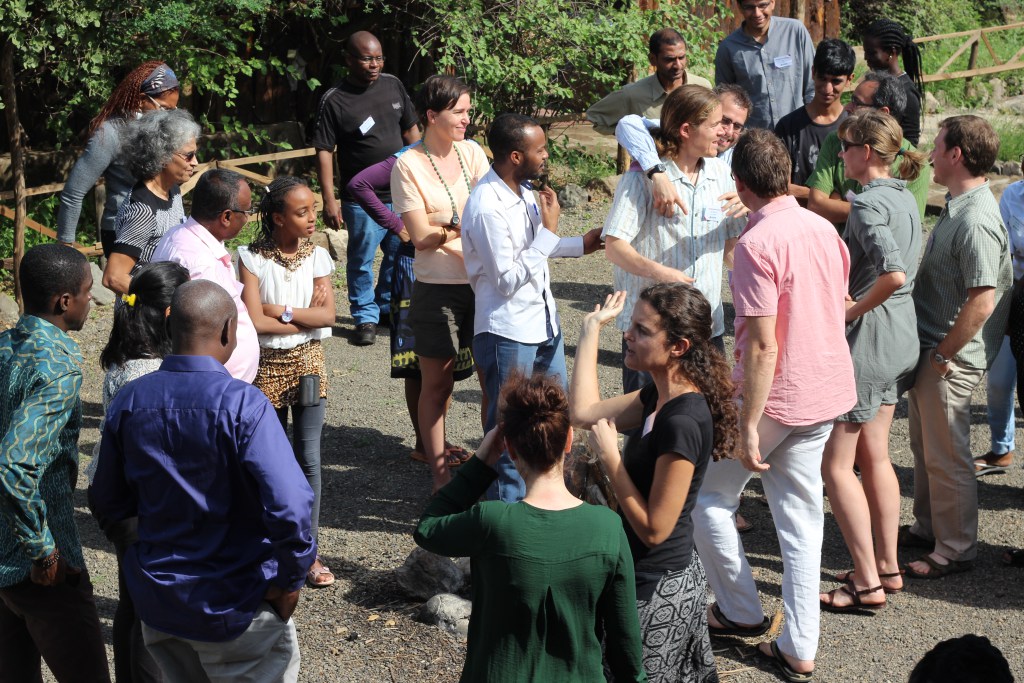
The rich mix of partners in ASSAR: NGOs, researchers, and local practitioners plotting a way forward together in Ethiopia in 2016. (Photo credit: Nick Reay/UCT-ASSAR)
Watching ASSAR evolve in terms of its own understanding of itself over the past couple of years has been an important learning experience for all of us (donor, researchers, NGOs). From the incredibly careful planning and thought that Oxfam have put into their approach (witness Jesse De Maria-Kinney’s description of this in an earlier piece in this series), to the practical implementation of new ways of seeking out adaptation pathways described by Mary Thompson-Hall, to the big questions they’ve been asking in global fora, as evidenced in Daniel Morchain’s piece last week.
Perhaps the most interesting debate playing out in ASSAR right now, and indeed across the whole of CARIAA, is about how much evidence is needed before influencing and impact can be pursued. Several times, people leading on Research into Use have felt ready to move on communications work about particular issues, and academic partners have told them to slow down because the research is not yet complete. Then the position of Research into Use leaders has tended to be: but we do know enough to act, even if you aren’t completely finished the research yet. This is a caricature, of course, since in ASSAR we also witness impressive fluidity in identities, with some researchers behaving more like activists and some activists behaving more like researchers. Nevertheless, these disagreements occur often and raise challenging questions about the role of research and evidence in the pursuit of change.
These questions have not been resolved, and play out behind the scenes even as I write this. But at least the conversation is happening, because time’s up for pretending that the conflict in agendas, roles, and understanding of ‘knowledge’ is a minor one. When we have conversations about ‘Research into Action’, we should also consider how we are able to get ‘Action into Research’ – all these questions, and all the possible combinations of different partners and approaches are important. It’s important that we consider all these things with our goal in mind: a more just world, with more resilient communities able to confront the challenges ahead. Research matters for this. So does action. So does the courage to try new things.
Article first appeared on Research to Action